
Dr. Nirupa V
Founder · MDS, Prosthodontics & Implant Dentistry
When a tooth is lost, two of the most common replacement options are a dental implant or a fixed bridge. Both have well-documented success rates, but they work differently and suit different clinical situations.
How a Dental Bridge Works
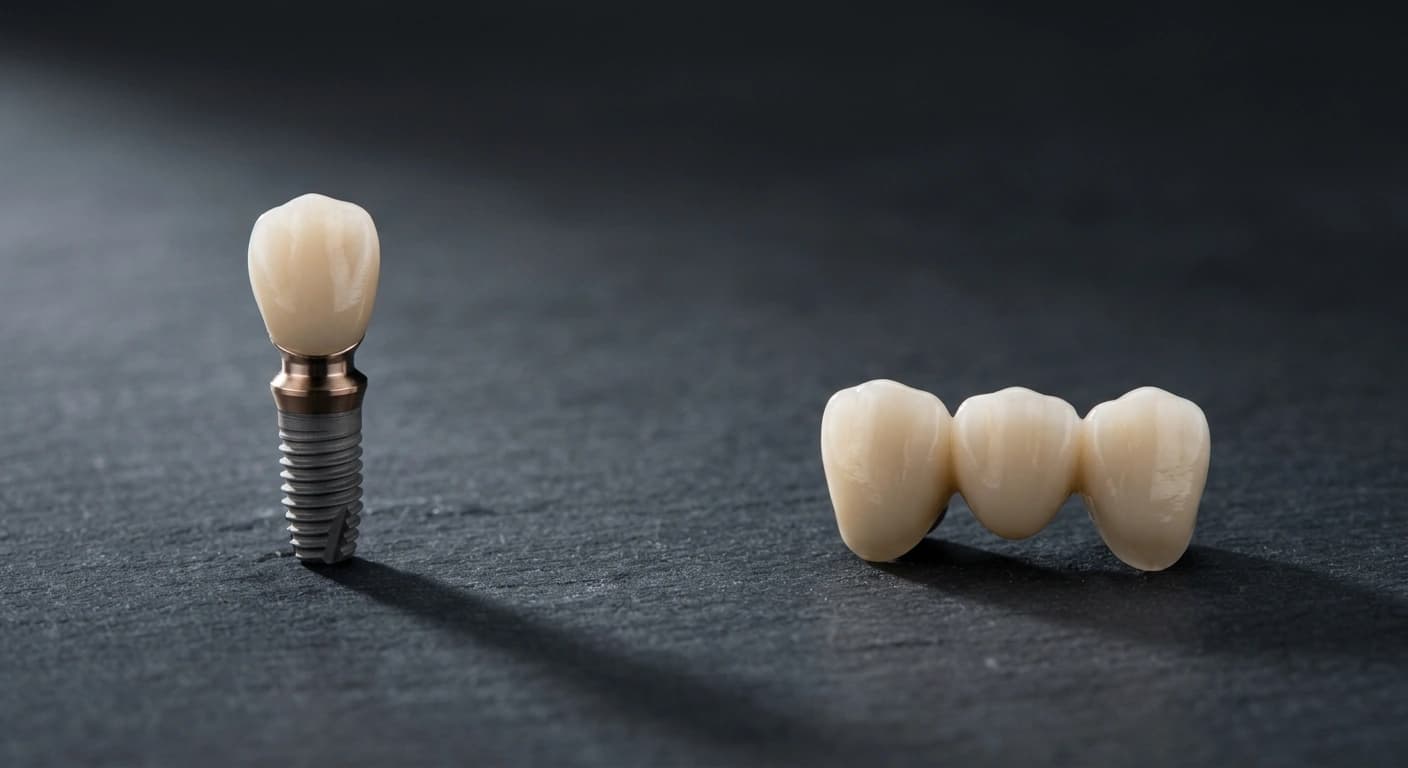
A traditional fixed bridge uses the teeth on either side of the gap (abutment teeth) to support a false tooth (pontic) in between. The abutment teeth are prepared (reduced in size) to accommodate crowns, and the bridge is cemented as a single connected unit.
How a Dental Implant Works
An implant is a titanium post surgically placed into the jawbone, where it integrates with the bone over 3–6 months. A crown is then attached to the implant via an abutment. The implant functions independently without involving adjacent teeth.
Key Differences
- Tooth preservation: an implant does not require preparation of adjacent healthy teeth. A bridge does.
- Bone preservation: implants stimulate the jawbone and help prevent resorption. Bridges do not.
- Longevity: implants have reported survival rates exceeding 95% at 10 years. Bridges typically last 10–15 years.
- Treatment time: bridges can often be completed in 2–3 weeks. Implants require 3–6 months of healing.
- Cost: implants generally have a higher initial cost but may be more cost-effective over a lifetime.
A systematic review in Clinical Oral Implants Research (Pjetursson et al., 2012) reported a 10-year survival rate of 95.2% for implant-supported single crowns and 89.2% for tooth-supported fixed dental prostheses.
When a Bridge May Be Preferred
- The adjacent teeth already have large fillings or crowns and would benefit from crown coverage regardless.
- The patient has medical conditions that contraindicate implant surgery.
- Insufficient bone volume exists and the patient prefers not to undergo bone grafting.
- A faster treatment timeline is needed.
When an Implant May Be Preferred
- The adjacent teeth are healthy and unrestored.
- Long-term bone preservation is a priority.
- The patient is in good general health and a suitable candidate for minor surgery.
- The missing tooth is in a visible area where aesthetics are critical.
Making the Decision
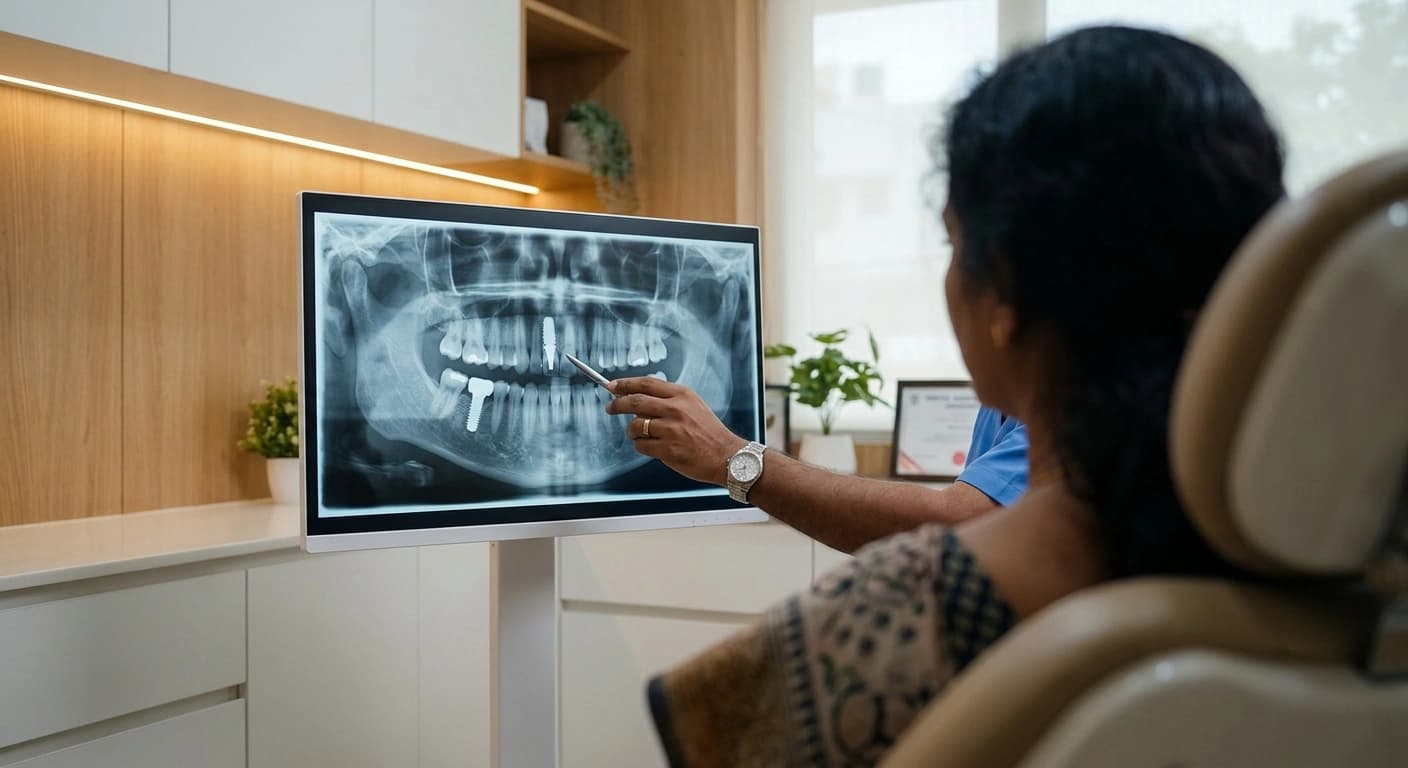
The choice between an implant and a bridge is best made after a thorough clinical and radiographic evaluation. At Bridges & Canals, both options are discussed in the context of the patient’s overall oral health, adjacent tooth condition, bone status, and personal preferences.
References
- 1.Pjetursson BE, et al. A systematic review of the survival and complication rates of implant-supported fixed dental prostheses. Clinical Oral Implants Research. 2012;23(Suppl 6):163–174.
- 2.Thalji G, et al. Dental Implants vs Fixed Partial Dentures. Journal of Prosthodontics. 2017;26(2):138–144.
- 3.Al-Quran FA, et al. Single-tooth replacement: factors affecting different prosthetic treatment modalities. BMC Oral Health. 2011;11:34.